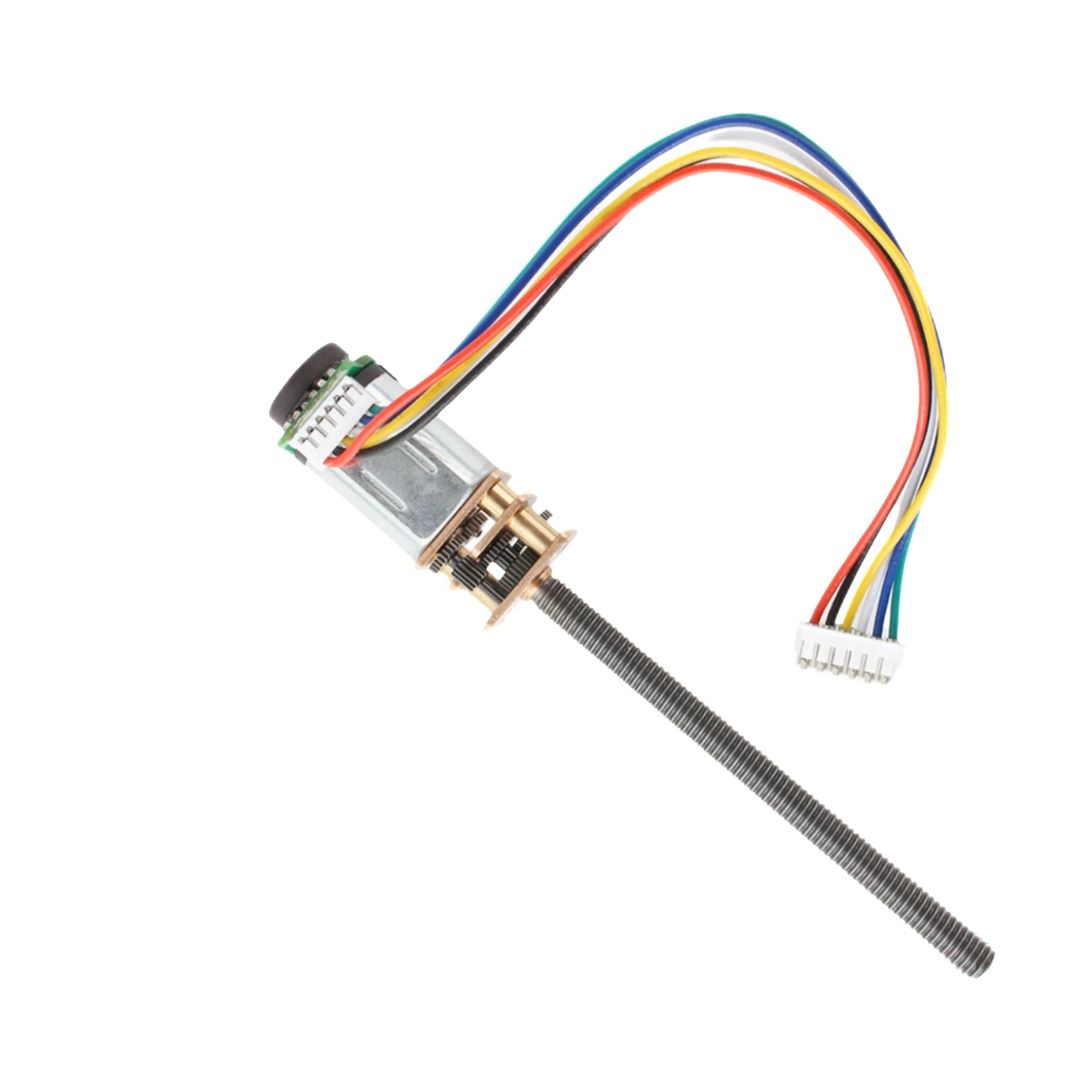
Use a micro planetary geared electric motor for battery-powered tools and click to see efficiency data at different loads before choosing a model
Hola
Frequency Driven Actuators signify a novel solution to translation, identifying themselves from customary mechanisms through their confident reliance on rhythms. The configuration typically entails a support and a shifting module, meticulously developed to increase productivity at a targeted vibration rate. Uses for these devices are spreading, stretching across fields such as precision manufacturing, healthcare devices, and advanced robotics where accurate adjustment and immediate effect are indispensable. In addition, their reduced dimensions and low power consumption transform them into advantageous for traveling equipment.
Reduced Core Gear Motors: Compact Design with Accuracy
Compact coreless precision powers present a significant alloy of outstanding efficiency and unrivaled movement in a incredibly condensed size. Contrasting with traditional wired DC motors, coreless schemes omit considerable each conductive drag, generating in improved energy utilization. It structure facilitates for remarkably minimal flow draw and augmented moment traits, turning it optimum for sophisticated roles particularly automated platforms, biomedical apparatus, and micro user devices.
- Advanced Output
- Controlled Navigation
- Small Configuration
Brushless DC Motor Benefits Compared to Brushed Motors
Selecting a old-fashioned DC driver and a commutator-free DC apparatus can feel confusing, but understanding the critical discrepancies will inform you. Traditional units are more basic and frequently inexpensive to purchase, offering a simple blueprint. However, they face from corrosion on the brushes, which necessitate intermittent renewal and yield voltage spikes. BLDC motors, on the other hand, cut out mechanical contacts altogether, resulting in amplified potency, stretched lifespan, and reduced servicing needs. They also function more silently. Consider the purpose; budget-friendly applications with typical energy needs might be suitable with a legacy motor, while advanced systems demanding sturdiness and economy experience greatly from a sensorless drive.
- Positive Aspects of Brushed Motors
- Lessened starting expense
- Easier setup
- Sensorless Motor Benefits
- Augmented productivity
- Improved durability
- Reduced assistance
- More gentle running
Micro Epicyclic Gear Systems: High Power Density
Small planetary devices depict a notable advance in energy methods. These particular small-scale units produce extraordinary torque within a astoundingly miniature profile. Such particular configuration employs rotational gear approaches to gain prime multiplication reductions and capability, rendering them ideal for scenarios ranging from mechanical systems and surgical tools to precision apparatus and satellite environments.
Mastering Linear Resonant Motors for Maximum Output
To obtain top efficiency from Linear Rotary Actuator (LRA) powers, a detailed insight of their special craftsmanship is critical. LRAs embody a innovative strategy utilizing linear travel to spawn rotary power. Key determinants include the interplay between the magnetism-based impacts and the mechanism-based components, which directly determine the quickness and precision of the end whirling. Careful assessment of these essentials is indispensable for effective execution and sustenance in various applications.
Key Perks of Coreless Gear Designs: What You Need to Know
Coreless precision machines exhibit significant perks contrasted with classic structures. In particular, the omission of a metallic hub contributes to reduced resistance, granting swift enhancement and superior adjustment. These qualities constitute them as recommended for assignments commanding meticulous command, such as automation and life science systems. Besides, brushless engines usually display extended working periods due to curtailed infrared manufacture.
Tips for Choosing Brushless DC Motors
Determining a proper magnetic commutated power source requires rigorous review of various crucial elements. Initially, understand the mandatory twisting force and pace. Afterward, examine micro planetary gear motor a electrical potential level and load current prerequisites. Moreover, consider the service setting, including thermal conditions, dampness, and conceivable jarring.
- Volume and weight are repeatedly vital restrictions.
- Functionality and capacity usage have to be assessed.
- Price - juggling effectiveness with financial limits is necessary.
Unique Emergence of Small-Scale Rotary Power Train Engines in Automation
The climbing demand for more compact and dependable motion in contemporary robotics is propelling the adoption of micro planetary torque multiplier motors. These components offer a major advantage over traditional actuators in applications like biomedical robots, aerial vehicles, and compact electronics. Unlike simpler designs, their rotary gear arrangement allows for augmented torque density and lessened backlash, producing increased positioning correctness. As well, the tiny size of these devices is essential for integration into confined robotic setups.
- Minimized Scale
- Boosted Power Density
- Augmented Delicacy
Evaluating LRA, Coreless, and Brushless Motor Options
Assessing selecting a engine for one’s initiative, grasping the separations between numerous types is critical. We’ll summarily review three usual options: LRA, Coreless, and Brushless DC Motor Types. Linear Motor Types give linear progression and are typically used in situations where rotational travel isn't mandated . Coreless electrical motors show augmented torque features and reduced rotational sluggishness versus standard brushed DC devices. In conclusion, Electronic commutated motors offer extraordinary output, prolonged useful life, and noise-free performance, while they often demand a complex control modules.