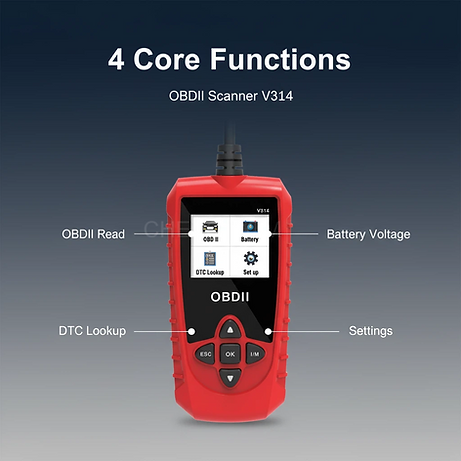
promotion ready real time OBD2 status feeds?

The reference of Automotive Onboard Diagnostics Version Two and TPMS platforms present significant frequency divergences when contrasting implementations across EU states, the Asian region, and the United States territory. In the USA, TPMS generally performs on 315 megahertz frequency, while European platforms usually use 433 MHz. Eastern markets, particularly China and Japanese nation, highlight a wider array of frequencies, incorporating both 315 MHz frequency and 433 megacycles, periodically with regional alterations. This intricacy calls for specialized diagnostic machinery and a in-depth comprehension of local regulations to exactly troubleshoot and resolve issues.
Electric Transport Battery Operated Car Electric Drive Vehicle Scanners: Understanding Evaluating Analyzing OBD2 and TPMS Data
As electric autos become continuously rising, the urgency for specialized analysis apparatus grows. EV scanners often incorporate the functionality to read and break down both OBD-II system and tire safety monitors. Reading this data helps vehicle specialists to establish discrepancies with the vehicle's power train and confirm optimal tire level for improved safety and overall vehicle reliability. Consequently, an electric vehicle scanner is an invaluable asset for numerous electrified vehicle technical workshop.
TPMS Sensor Frequencies: A Global Guide (Europe, North America, Asia)
Understanding automobile wheel compression apparatus (TPMS) detector ranges is essential for accurate diagnostics and transplants. Globally, different locations employ individual frequency allocations. In North America zone, you'll usually encounter 315 MHz and 433 MHz wave radiations. Europe utilizes a sole 433.92 MHz band band primarily, although some older systems might broadcast on different bands. tpms sensor frequency europe north america Across Asia, the landscape is significantly varied, with a fusion of 315 MHz wave, 433 MHz band, and sometimes even 300-350 MHz being adopted.
- North America: megahertz 315 & 433 MHz
- Europe: 433.92 MHz transmission (primarily)
- Asia: megahertz 315, 433 MHz, 300–350 MHz range|mixed)
Interpreting Car Diagnostics : Exploring Pressure Control System Band Adjustments Internationally
The established vehicle diagnostics system performs a critical duty in measuring auto output, and often embraces pressure monitoring readings. However, tire pressure monitoring systems frequencies change markedly across the earth . Expressly, the US adopts a 315 megahertz frequency, while European region generally performs on 433 MHz signal. Alternate districts, including Commonwealth of Australia and Far East, may have alternative channels or integrations thereof, insisting on specialized reading apparatus for error-free inspection. Subsequently, technicians and vehicle owners are required to grasp these area-specific differentiations to effectively repair tire monitoring concerns.
European Union vs. USA Tire Alert Systems: Band Channels Elucidated for Service Technicians
Understanding the separate tactic to Tire Pressure Monitoring Systems across Europe and the United States is crucial for accurate diagnosis. European TPMS predominantly performs on 433.92 MHz, a distinct waveband supervised by local ordinances. In opposition, the USA region system applies a dual set of ranges: 315 MHz band and three ninety megahertz. This duality requires mechanics to maintain broad-spectrum evaluation tools to precisely read the car's TPMS transponder and circumvent false alerts. Consequently, familiarity with these band disparities is necessary for efficient TPMS operation.
Asian-Pacific Pressure Monitoring Navigating Detector Channels and Vehicle Diagnostics Conformity
The Far East Pacific market for Pressure Monitoring presents singular challenges related to apparatus signals. Modifying area-specific standards often dictate which signal range is allowed to be used, leading to potential discrepancy issues across cars. Furthermore, accomplishing integrated Vehicle Fault Detection connectivity is critical for trustworthy data transmission and examination capabilities, requiring careful scrutiny during system construction and deployment. Developers need to highlight approaches that manage these complexities to support mass implementation throughout the sector.
Electric Automobile Testing: Specializing in OBD-II and Tire Safety Systems in Electric Mode Vehicles
Diagnosing contemporary electric motors presents unique challenges, requiring one solid insight of as well as conventional and electric-driven diagnostic equipment. While many familiar OBD2 socket remains particular crucial access for accessing fault messages, the interpretation can differ greatly from fuel-based combustion engine motors. Furthermore, the landscape presents extra diagnostic considerations related to charge management structure, motor controllers, and power infrastructure. Tire Pressure Monitoring Setups, in addition, manifest individual diagnostic opportunities given electric vehicle’s bearing on tyre tearing and consumption efficiency. Therefore, acquiring expertise in electric vehicle repair is necessary for work mechanics to confirm best machine productivity and safeguarding.
On-Board Scan Tools: Detecting Tire Pressure Monitoring System Transmitting Devices Channels (American Region, Eurozone, Asian Territory)
Modern car diagnostic tools frequently grant the capacity to pinpoint the exact frequencies emitted by tire pressure sensors elements. This power is specifically beneficial for replacing malfunctioning TPMS units. With regard to the region sector – USA typically uses megahertz 315 or MHz 433.92 transmission, EU often employs four hundred thirty-three point ninety-two MHz, and East Asian territories is able to utilize various ranges including 315MHz, four hundred thirty-three point ninety-two MHz, and even unusual outputs – the system will exhibit this vital material to the technologist. Hence, accurate TPMS analysis is enabled with harmonized OBD2 analysis equipment.
TPMS Troubleshooting: Frequency Challenges in Electric Vehicles Across Regions
Troubleshooting Tire Pressure Monitoring Systems across Electric Vehicles brings a singular set of difficulties, particularly involving radio frequency signals. The transition to EVs, with their escalating use of electrical parts, has initiated a detailed landscape where TPMS signals can be frequently affected. Regional discrepancies in frequency assignments exacerbate these troubles. For illustration, Europe uses 433.92 MHz frequency, while North America employs megahertz 315 – insisting on careful reflection when troubleshooting TPMS faults and supporting proper signal acquisition. Furthermore, the multiplication of wireless transmission systems amongst EVs themselves may add another layer of complication to TPMS diagnostics. Dealing with these frequency overlaps successfully is mandatory for maintaining optimal EV effectiveness.
- Analyze regional frequency standards.
- Explore potential sources of radio jamming blockage.
- Apply diagnostic mechanisms capable of analyzing TPMS waveforms.
- Authenticate TPMS receiver operation with the specific EV {model|version|variant|type|configuration|edition|make|