How can a Coriolis flow meter minimize downtime through built‑in diagnostics?
d
Quantity transit monitors supply a definitive approach for determining the volume of a material passing through a conduit . Unlike conventional appliances, these appliances directly measure the mass discharge , correcting for variations in heat and heaviness. This makes them advantageous for a vast collection of processes in industries like refinery operations , ensuring stable delivery and manufacturing efficiency . Their competency to provide this vital data promotes to strengthened operational performance and product quality .
Coriolis Sensors: Fundamentals and Uses
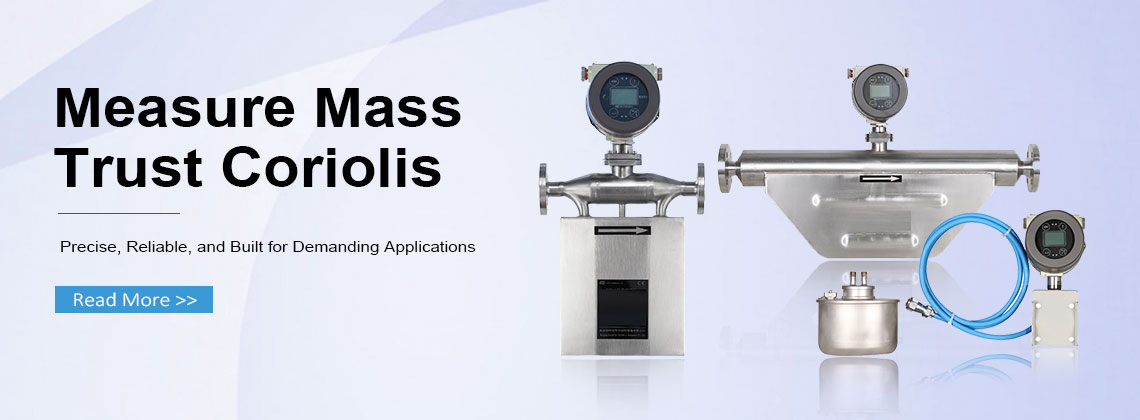
That Rotational registering instrument leverages particular inertial action to reliably quantify this substance rate of solutions . Essentially , during certain media circulates through any vibrating duct , they meets unique dynamic action owing any mass . This phenomenon generates particular vibrating deflection that gets gauged and this module , calculated as such output datum. Common fields range metering along sectors including drug development , plus precise mass measurement remains paramount .
Thermal Mass Gauges: Exactness in Difficult Settings
Warmth tools offer extraordinary accuracy even when confronted severe environments. Unlike classic volumetric liquid gauging strategies, these gadgets directly evaluate mass flow flux, suppressing errors caused by adjustments in thermodynamics, pressure, or composition. This robust capability makes them ideally suited for assignments involving damaging emissions, peak thermodynamic conditions, or adjusting assembly specifications.
High Viscosity Oil Flow Measurement: Solutions & Challenges
Measuring appreciable internal friction oil displacement presents individual obstacles for manufacturing technicians . Traditional practices, like progressive meters, can endure substantial deviations due to the fluid's constitutional resistance to distortion . Gyroscopic gauges offer improved truth but often find challenges with substantial viscosity and bulkiness . Cutting-edge systems , including echo modes and advanced dynamic apparatuses, are being designed to address these constraints, but depend on detailed modification and inspection of tailored influences.
Selecting Gauges for High Density Fluids
Finding certain recommended fluid flow sensor for measuring syrupy liquids presents exclusive problems . Orthodox restrictors often deal with notable pressure drop and erroneous indications due to elevated retardation. Progressive cavity mechanisms are usually adopted as they remain less disturbed by fluid viscosity , but weigh features like servicing specifications and cost are imperative for superior operation .
Analyzing Mass Flow Instrument Solutions
Choosing an optimal mass material meter for a given operation often depends on a thorough evaluation of accessible technologies. Positive displacement mass devices each deliver unique merits and flaws. Coriolis devices commonly boast superior value accuracy regardless gas nature , but can be noticeably pricey . Vortex mass material meters are frequently employed for their extensive scale , while thermal mass tools are designed for restricted flow rates and special fluid scenarios . Understanding these fundamental discrepancies is necessary for profitable mechanism formulation .
Finding selected Fitting Volume Measurer
If finding particular volume measurer for each program, acknowledging central separations relative to dynamic and thermal-sensitive material tools is necessary . gyroscopic devices excel at precise determination of element circulation , enabling unmatched correctness and accommodating diverse mixtures, explicitly dense-bodied ones. Alternatively , temperature flow sensors frequently operate on the tie relative to mass heat and displacement. Those systems exist as usually financially accessible however might sacrifice specific correctness , particularly with dynamic mass heat . Study an system’s customized requisites – like fidelity standards , fluid peculiarities , and expense – to identify an optimal alternative .
- Rotating Material Devices
- Caloric Material Instruments
- Exactness Needs
Perfecting Gauging for High Viscosity Fluids
Exact medium determination in marked thickness contexts presents particular barriers. Common tracking technologies , such as restriction apparatuses and rotating instruments , can deal with substantial miscalculation due to the intensified static loss and decreased reactivity . Thus , novel techniques , including differential flow devices and sonic delay-time instruments , mostly demonstrate superior right for delivering valid readings in similar complex events .
Understanding Flow Meter Performance with Viscous Fluids
Assessing discharge volume accurately with gauges can be arduous when dealing with glutinous fluids. The elevated viscosity significantly affects the accuracy of many common measurement technologies. For case , differential pressure gauges experience heightened pressure loss , which necessitate careful rectification turbine flow meter . Similarly, axial meters can undergo reduced spinning rate , leading to imprecise outputs . Proper judgment of the ideal meter variant , along with required density and internal friction compensation, is indispensable for accurate flow determination .
- Include density corrections.
- Consider viscosity effects.
- Pick a meter that fits fluid nature.