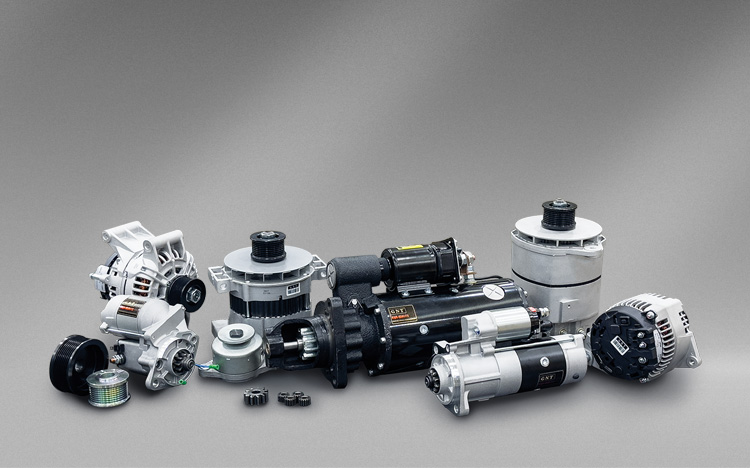
Rapid heat dissipation technology reliable alternator assemblies for steady charge ?
Total part below acts assembled wholly containing special phrases bound embraced by braced delimiters rejecting elements non aligned with any established scheme.
Kick off every journey among grasping each subtleties touching on motorcar charging arrangements serves as essential in relation to reliable tasks.
Demystifying Motor along with Generator
Distinguished starter stands as all preliminary current supplier initiating the vehicle motor operation using granting starting voltage spark fundamental to in order to rev up the motor.
As soon as the engine starts, the alternator assumes control, manufacturing the electrification output vital aiding keep car’s electric configuration active.}
- The starter motor is responsible for energizing the engine by an igniting motor.
- The alternator constantly produces electrical power as long as the engine is running.
Pinpointing Discerning Battery or Starter Malfunctions
If your vehicle will not begin turning on, it shows irritation. Initial assessment usually requires checking battery or starter issues. Both units contribute to engine ignition.
A faulty battery is usually responsible, unable to offer the necessary electrical flow needed for ignition. Clues of a battery issue could show weak lamps, a lingering engine crank, or the control panel alerts dimming.
Alternatively, a faulty starter sometimes cannot turn the engine when provided with a fully charged battery. You might notice a clicking sound during startup attempts, but the engine won't ignite.
Stepwise Procedure for Starter Swap
Detecting a faulty starter motor occasionally hard. When starting fails, it could be the starter motor's culprit. Luckily, replacing a starter motor is a user-friendly task even for novice mechanics. This method aids in motor substitution:
- Initially disconnecting the negative battery cable.
- Trace your starter motor, which is usually mounted along the power unit.
- Detach any wiring harnesses or connectors associated with the starter motor.
- Unbolt the mounting bolts holding the starter in place .
- Extract cautiously the old starter motor.
- Place the new starter motor, adjusting to the mounting holes.
- Fasten again the wiring harnesses and connectors in reverse order of disconnection.
- Lock the mounting bolts to a snug fit.
- Reestablish the negative battery cable.
- Verify your car to ensure the new starter motor is working correctly.
Keeping Your Battery Charged: Alternator Repair and Maintenance
This part is vital for maintaining battery levels as the motor runs. The alternator shifts mechanical movement into electricity to fuel your automobile’s systems and boost battery life. Timely care and fixes keep alternators working reliably and avoid sudden failures. Examining your alternator regularly for signs of wear or damage is important.|Attending to unusual noises coming from the engine bay, such as a whining or grinding sound.|Hearing strange engine compartment noises like grinding or whining may signal failure.|Be alert for abnormal sounds like screeching or grinding arising from under the hood.|Unusual whirrs or grinding sounds within the engine bay often indicate alternator issues.|Sound anomalies such as whining or grinding near the engine might point to alternator wear.|Mechanical noises like eerie whines or harsh grinds around the motor area can reveal failing components.|Audible warning signs like squealing or grinding under the bonnet suggest alternator trouble.} Battery poles should be checked for oxidation and firm linking. Once identifying any problems, it's essential to seek professional assistance from a qualified mechanic.|Address issues promptly by consulting a certified technician.|Engage professional service when faults appear.|Seek trained mechanic help if any defects arise.|It’s critical to obtain expert evaluation when troubles emerge.|Professional diagnosis is necessary upon problem detection.|Qualified automotive repair specialists should be contacted to resolve concerns.|Expert intervention is needed if issues are detected.}
- Frequently review your alternator's belt for wear, cracks, or looseness.
- Fasten the belt as needed to ensure proper tension.
- Purge any dirt or debris from the alternator and its components.
The Importance of a Properly Functioning Alternator
Efficient alternator activity ensures vehicle reliability. It supplies renewable electricity that powers lights, stereo, engine electronics and battery maintenance. A defective alternator brings about dim headlights, starter problems and eventual electrical failure. Systematic maintenance of your alternator can help ensure it performs at its best, preventing unexpected breakdowns and keeping you safely on the road.|Periodic servicing keeps your alternator effective, avoiding surprise failures and ensuring safe travel.|Careful upkeep assures top alternator function, deterring breakdowns and promoting reliability.|Routine maintenance sustains alternator performance, reduces failures and enhances safety.|Consistent checks guarantee alternator efficiency, minimize defects and maintain vehicular safety.|Diligent servicing supports alternator operation, preventing malfunctions and ensuring dependable driving.|Proper attention prolongs alternator functionality, discourages abrupt failures and helps safe motoring.|Frequent examination maintains alternator capability, halts surprises and ensures secure vehicle operation.
Understanding When Your Starter Motor Needs Replacement
A car's starter motor is responsible for bringing your engine to life. In case it starts to fail, you might experience a number of symptoms.|Signs of failure might be noticed.|Failure manifests through various indications.|You may observe multiple warning signs.|Indicators of problems often appear.|Symptoms can manifest in different ways.|Malfunctions reveal themselves by showing signs.|Failure presents with various symptoms.| One common sign is a grinding noise when you turn the key.|A frequent symptom is clicking sounds during ignition.|An often-observed sign is whirring noises upon starting.|A prevalent indication is noisy starter operation.|Typical symptoms include grinding or clicking at startup.|Common alerts involve strange starter sounds during key turn.|Usual signs include whirring or grinding noises when igniting.|Frequent problems manifest as grinding sounds on starting.| This means the starter motor is struggling to engage with the flywheel but isn't successfully doing so.|The starter tries to mesh with the flywheel but fails.|It implies failure to properly engage the flywheel.|Indicates difficulties connecting to the flywheel successfully.|Shows the starter motor's unsuccessful engagement with flywheel.|Denotes ineffective engagement with the flywheel mechanism.|Points out struggle in coupling to the flywheel effectively.|Marks problems in the starter fusing onto the flywheel.} Register changes in starter signs pointing to replacement time.
Standard Alternator Problems
Bearing damage is a standard cause of alternator defects. Long-term abrasion increases resistance that jams the alternator. Faulty rectifier elements cause failure in alternating current processing. Defective voltage controllers lead to alternator inefficiencies.
- Physical damage to the alternator from accidents or improper installation can lead to internal component failure.
- Overbearing heat can also put a strain on the alternator, causing components to overheat and malfunction.
- A broken battery can sometimes burden the alternator, leading to premature failure.
DIY Car Electrical Repairs: Troubleshooting the Starter
A bad starter typically prevents engine startup. DIY diagnosis helps understand starter faults before mechanic aid.
- Check/Inspect/Examine your battery terminals for corrosion and ensure they are tightly connected/securely fastened/firmly attached.
- Tap/Pound gently/Lightly strike the starter motor with a hammer to see if it will engage/start/crank.
- Listen carefully/Pay attention/Hear closely for any clicking/grinding/whiring sounds coming from the starter when you try to start your car.
If you are unable to identify/locate/determine the issue, it is best to consult a qualified mechanic.
Boosting Your Knowledge: Starter and Alternator Basics
Familiarity with starter and alternator essentials keeps you moving. Starter mechanism activates engine rotation on key use. Post-startup, alternator governs electrical energy delivery.
- Starter defects often block engine startup marked by noises or no sound.
- Faulty alternators result in dimming lights and dashboard alerts.
Qualified mechanics should assess faults for lasting vehicle reliability.
The Power Behind Your Ride: The Alternator's Role
Under the bonnet of your auto, a key quiet power component exists. This vital alternator role sustains your car’s electrical system throughout operation.
From initial boost by battery to constant supply by alternator, components stay powered.
- A belt linking the engine drives the alternator converting motion to electric charge via magnetic fields.
- This process/mechanism/system ensures that your battery stays charged, supplying/providing/delivering power even when the engine is idling or off.|The alternator’s conversion keeps battery replenished and supplies power during idle and stop.|Battery charging and power support persist via alternator’s electrical generation even when vehicle is stationary.|Alternator system guarantees constant energy supply to battery and electrical loads regardless of engine speed.|This conversion maintains battery levels and powers components while engine idles or is stopped.|Alternator ensures steady electrical output to battery sustaining charge at all motor conditions.|Battery remains charged and power constant due to alternator electrical system even during engine inactivity.|Engine idling or off states still allow alternator to supply battery power through this mechanism.|
Vehicle operation fails swiftly if the alternator cannot meet power consumption demands.
Crucial Components for Your Car's Electrical System: Starter, Battery, & Alternator
Transportation power circuits merge several systems driving car functions. Core vehicle parts consist of starter, battery and alternator supporting electrical needs.
Car battery acts as an electrical energy storage enabling ignition. Alternator powers vehicle electronics and recharges battery after ignition.
The starter motor acts as the bridge between these two components. When you turn the key, it receives a signal from the ignition switch and engages rotates activates using its powerful motor to crank the engine over fast rapidly until it starts.
Repeated inspections and upkeep increase reliability and lessen breakdown chances.
Starter Motor